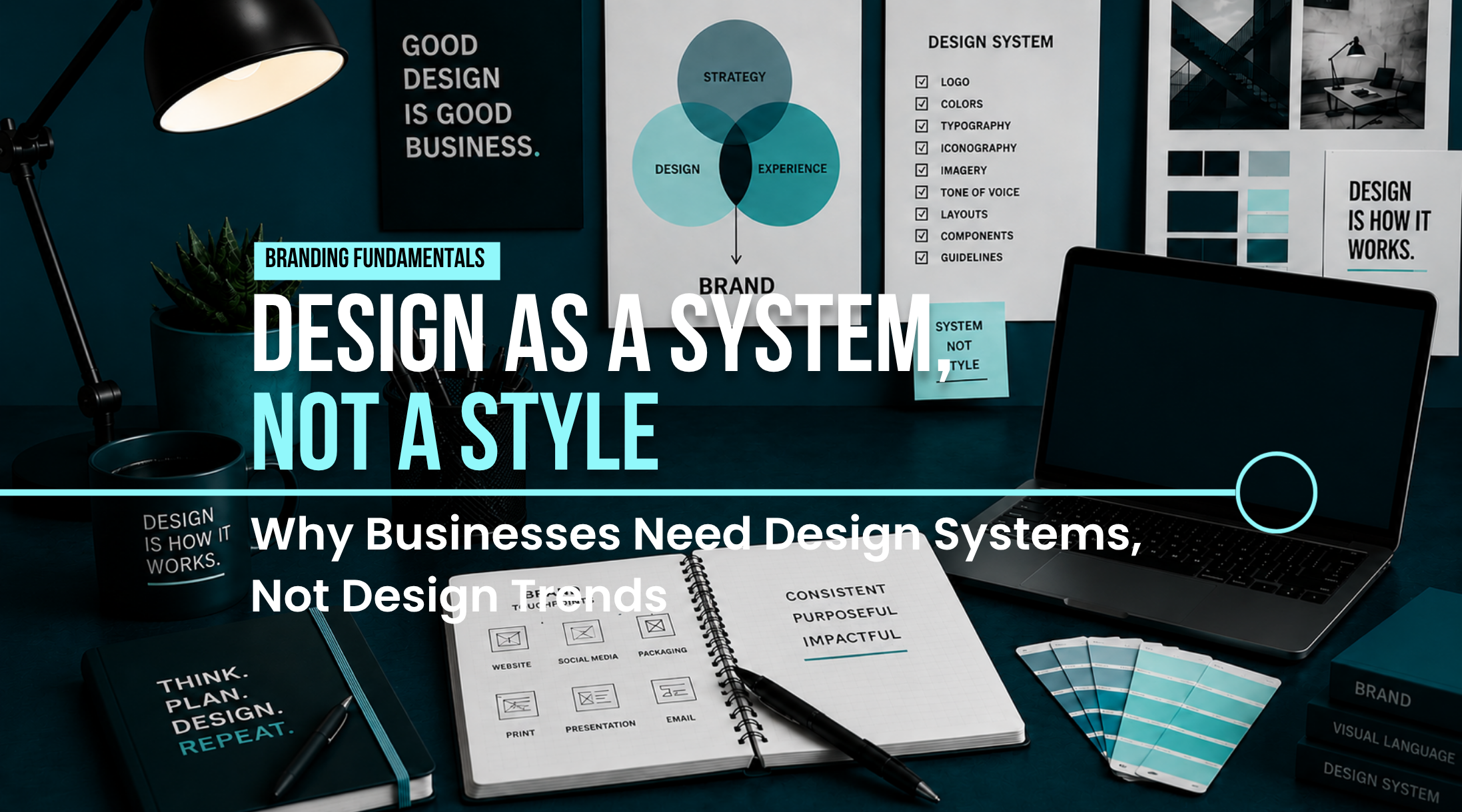
Why Businesses Need Design Systems, Not Design Trends
Design is not just what it looks like and feels like. Design is how it works. -Steve Jobs
For most of us, design is something that looks good. And that’s true if you are the one looking at it. But under the hood, a deep psychology is working overtime. Even if you “like” or “love” a design, it’s often its functionality that makes you take a desired action or connect with it.
It’s the job of the designer to ensure that the system behind the design is well established, and it’s the job of the business owner to help make it happen.
Steve Jobs once famously said, “Design is not just what it looks like and feels like. Design is how it works.” Few examples illustrate this better than Apple, where design, systems, and functionality work together to create a consistent experience across products and touchpoints.

What Does a System Even Mean?
Design or style often relates to a particular graphic, campaign, or project. The colors, layouts, fonts, and visual elements are specific to that piece of work. While the graphic may look great on its own, it is not always guided by a broader framework that connects it to the rest of the brand.
A system, on the other hand, is a broader perspective. It is the complete set of design principles and guidelines that connect with the brand, its tone, and its audience. It provides a visual direction that guides every individual design element.
While style defines how a graphic should look, the system defines the rules—what fonts to use, what tone to communicate, what colors represent the brand, and what design principles every graphic should follow. This ensures that all visual and customer touchpoints create a consistent experience, allowing consumers to subconsciously recognize and connect with the brand.
Have you ever noticed that you can often tell a particular ad is from Zomato or Apple just by looking at it, even before reading the brand name? That’s a design system at work.
Why Most Businesses Struggle With This
As a design studio, we have worked with hundreds of businesses over the last 14 years. One thing we have consistently noticed is that owners and stakeholders love to provide input during the design process. And honestly, we love that too. We enjoy seeing our clients take an active role in shaping their brand.
However, the problem starts when that involvement turns into the classic “make the logo bigger” syndrome.
Often, business owners suggest things like, “Can we use this font?” or “This color palette from Pinterest looks great, can we use it?” Sometimes they want a competitor’s poster recreated because it looks appealing. The issue isn’t the suggestion itself; it’s when those suggestions are made without considering the brand’s established direction.
As a result, the final design may look good in isolation but lack consistency with the rest of the brand.
And in many cases, businesses don’t even have brand guidelines in place. Believe me when I say that many multi-crore businesses still operate without them.
The second issue is when the designer is treated purely as an executor. If that’s the case, you’re essentially asking someone to draw what you’re already thinking. Very little design thinking is involved.
Design delivers the most value when designers are involved in solving problems, not just decorating solutions. The ideal process is to involve the designer or design team from the beginning and connect them with the marketing, copywriting, and web design teams to develop a strong and scalable design system.

Role of the Designer and Business Owner
The designer (or design team) and the business owner (or approval team) both have an important role to play in ensuring that design becomes a system rather than just a style—and that it contributes to business growth.
It’s the responsibility of the designer not to jump straight into creating visuals, but to first understand the business, its audience, and its goals. They should help develop a brand voice (if one does not already exist) and ensure that it is reflected consistently across all design assets and communication channels.
The designer or design team must also communicate the importance of the system to stakeholders and educate them on why consistency matters.
Business owners and stakeholders, on the other hand, must understand that design is not merely a creative exercise. It is a business tool. They should treat design as a strategic investment, not a one-time expense.
They must also avoid being swayed solely by personal preferences or short-lived trends. Instead, they should prioritize consistency, brand voice, and long-term brand identity. Design should be evaluated by its impact on customer experience, trust, recognition, and business growth—not just by how attractive it looks.
One more important thing is that business owners should involve designers early in decision-making, not just at the execution stage. As such, it becomes imperative to work with someone who is not just a graphic designer, but someone who understands the broader role of design and what happens before and after a design is created.
They should be someone who can guide the design process rather than simply execute instructions.
A designer’s job isn’t to make things look good. It’s to make the business work better through design. A business owner’s job isn’t just to approve designs. It’s to ensure that the design system is respected long after the designer’s work is done.
Styles attract attention. Systems build recognition.
A trend may make your brand look relevant today, but a design system ensures it remains recognizable tomorrow. Businesses that invest in systems don’t have to reinvent themselves with every campaign—they simply build on a foundation that already works.
Like what you see?
Every successful logo begins with a clear strategy, not just creativity. If you’re ready to build a brand that communicates trust, personality, and long-term value, we’d love to help.